Chhurpi Price in Nepal — What You're Actually Paying For
By Banstola Brothers·Chhurpi·
If you've shopped for chhurpi in Nepal, you've probably noticed the price gap is wild. One piece at a local pasal costs Rs 100. A packet online says Rs 2,000 per kg.
So what's actually going on?
The price of chhurpi is shaped by several real factors — the animal the milk came from, where that animal grazed, how long the chhurpi was dried, and where it's being sold. This guide breaks it all down, backed by research.
Factor 1: Type of Milk — The Biggest Price Driver
According to a 2023 peer-reviewed study published in the Journal of Ethnic Foods (Springer/PMC), chhurpi in Nepal is made from four main milk sources — yak, Chauri (a yak-cow crossbreed), cow, and buffalo — and the milk source is the single most important factor in price.
🐂 Yak Milk — Premium Tier (NPR 2,500–3,000/kg retail)
Yaks graze above 3,500m on wild medicinal alpine plants in regions like Dolpo, Mustang, and Langtang. Their milk is significantly richer in fat, protein, and omega-3s than lowland cow milk. The same study notes that Nepal's total milking yak population is only around 18,000 animals — making this milk genuinely rare. It takes 6–8 litres of yak milk to produce just 1 kg of hard chhurpi.
🐄 Chauri Milk — High-Value Hybrid (NPR 2,000–2,500/kg)
Chauri is a yak-hill cow hybrid that grazes at 2,500–4,500m. It produces more milk volume than a pure yak while still grazing at altitude. Widely preferred by exporters — the Petfood Industry reports that a yak-buffalo or chauri-buffalo mixed chhurpi is considered the best quality for export.
🐄 Hill Cow Milk — Most Common (NPR 1,600–2,000/kg)
This is what most people in Pokhara and Kathmandu buy daily. Ilam in eastern Nepal is the most famous source — its cooler climate and mid-altitude pastures produce rich, flavourful cow milk chhurpi. NepalConnect reports that cooperatives in Syangja's Waling Municipality sell cow milk chhurpi at the producer level for NPR 1,000–1,100/kg.
🐃 Buffalo Milk — Usually Mixed (NPR 800–1,400/kg)
Buffalo milk is high in fat but produces cracked, uneven chhurpi on its own. Research confirms that mixing buffalo milk with cow or yak milk solves this — creating a smooth, high-fat product that is preferred by both domestic consumers and international exporters.
Factor 2: Altitude and Location
Geography affects both production cost and what ends up in your market.
High Himalaya (3,500m+): Yak chhurpi from Dolpo, Mustang, or Solukhumbu must be transported by porter or pack animal — no roads. This remoteness adds significant cost. Himalayan Masters notes that hard yak chhurpi retails in Nepal at around NPR 1,500–2,000/kg, with smoked or aged varieties going higher.
Mid-Hills (800–2,500m): Districts like Ilam, Dolakha, Syangja, and Baglung are Nepal's main chhurpi production hubs. The Rising Nepal reported in April 2024 that Dolakha Dairy Industry alone supplied over 40,000 kg of chhurpi to other districts in a single fiscal year, at NPR 60–75/litre for cow milk and NPR 75–100/litre for buffalo milk at farm gate.
Terai (below 300m): Almost no traditional chhurpi is produced here. Commercial Terai cow milk lacks the fat richness of highland milk, and the chhurpi made from it is considered lower quality. Retail price: NPR 500–900/kg.
Factor 3: Hard vs. Soft
Soft chhurpi loses 60–70% of its weight as it dries into the hard variety. To produce 1 kg of hard chhurpi, you need roughly 2.5–3 kg of soft chhurpi. That's why hard costs so much more.
Snow Hill's product data on Amazon shows that properly dried hard chhurpi can contain 63–65% crude protein by weight — a concentration only possible through extended drying.
Factor 4: Smoking and Drying Method
Traditional chhurpi is smoked over wood fires — this takes more time, adds a distinctive flavour, and acts as a natural preservative.
Smoked chhurpi typically costs NPR 100–300 more per kg than plain sun-dried equivalents.
Factor 5: Season
Yak and Chauri milk is seasonal — animals produce the most from June to September when they're on alpine pastures. Outside this window, supply is limited and prices for yak chhurpi rise.
Hill cow and buffalo milk is available year-round, making it less sensitive to seasonal swings.
What to Look for When Buying
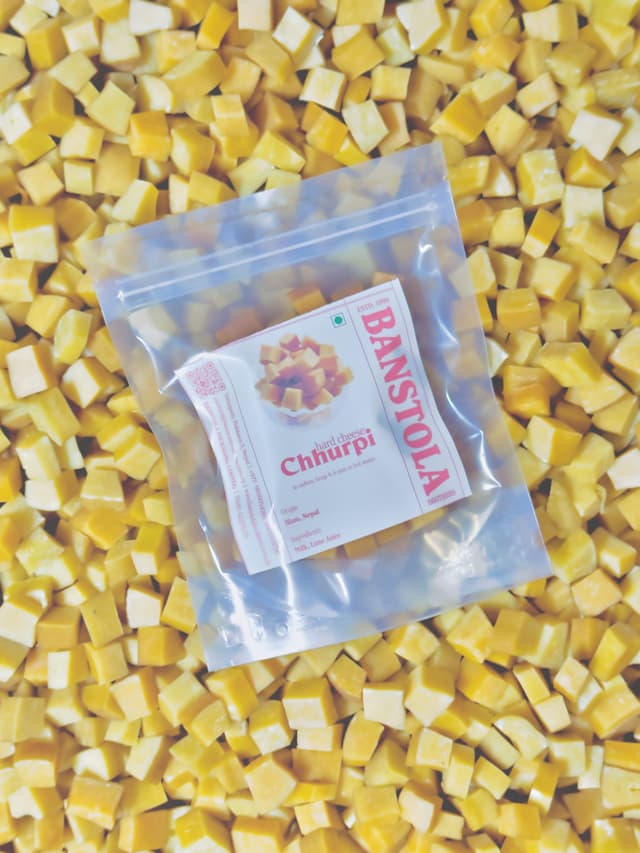
Colour: Pale white = fresh/soft. Amber to dark brown = longer-dried or smoked.
Hardness: Real hard chhurpi should feel like stone. If it bends or dents, it has absorbed moisture or is mislabelled.
Origin: The best sellers can tell you — or label — exactly where the milk came from. Ilam, Mustang, Dolakha all have distinct reputations. Unlabelled chhurpi from an unknown source at a suspiciously low price is a red flag.
Smell: Milky, slightly tangy, faintly smoky for smoked varieties. Any rancid or very sour smell = poor storage.
Bottom Line
Expensive chhurpi is worth the price — when the premium reflects real factors like altitude, milk source, and drying time. The problem is mislabelling. The best protection is buying from a seller who knows their supply chain.
At Banstola Brothers, we've been sourcing and selling chhurpi in Pokhara since 1999 — long before it became a trending export product. We can tell you exactly where every piece comes from.